

Executive Summary
Social marketing is the use of commercial marketing techniques to promote the adoption of behaviour that will improve the health or well-being of the target audience or of society as a whole. Social marketing is not a stand-alone awareness raising tool; is rather a framework or structure that combines classic promotional tools with knowledge from many other scientific fields to understand how to influence people’s behaviour. Improving the current situation regarding sanitation and water in your area is very much connected with changing or adapting behaviours of the local community. By applying social marketing principles, you can positively influence current behaviours and therefore improve the well-being of the local community.
What Is Social Marketing?
(Adapted from MACFADYEN et al. 1999; SCOTT 2005; NATIONAL EXCELLENCE COLLABORATIVE n.y.)
Social Marketing is similar to conventional marketing, but the end goal is not to sell a product to make profits, but to achieve a social benefit (e.g. improvement of health, conservation of resources) for the society.
Social marketing is not a stand-alone awareness raising tool; is rather a framework or structure that combines classic promotional tools (see the other tools in awareness raising (see PPT)) with knowledge from many scientific fields such as economy, psychology, sociology, anthropology and communications theory to understand how to influence people’s behaviour. Social marketing is not easy to implement and involves changing intractable behaviours, in complex economic, social and political climates, often with very limited resources.
Though there exist numerous definitions of social marketing, this factsheet is based on the following definition:
“Social marketing is the use of commercial marketing techniques to promote the adoption of behaviour that will improve the health or well-being of the target audience or of society as a whole.”
Improving the current situation regarding sanitation and water is mostly connected with changing behaviours of the local community. By applying social marketing principles, you can efficiently change the current behaviour and therefore improve the health or well-being of the local community.

Some Fundamental Marketing Principles
(Adapted from NATIONAL EXCELLENCE COLLABORATIVE n.y.)
The following marketing principles which are critical to the success of social marketing campaigns include:
- Understanding your AUDIENCE, their needs, wants, barriers and motivations.
- Being clear about what you want your audience to DO; changes in knowledge and attitudes are good if they lead to ACTION.
- Understanding the concept of EXCHANGE; you must offer your audience something very appealing in return for changing behaviour.
- Realising that COMPETITION always exists; your audience can always choose to do something else.
- Being aware of the “4 P’s of Marketing” and how they apply to your programme.
- Understanding the role that policies, rules and laws can play in efforts to affect social or behavioural change.
Subscribe here to the new Sanitation and Water Entrepreneurship Pact (SWEP) newsletter. SWEP is a network of organizations joining hands to help entrepreneurs design and develop lasting water and sanitation businesses.
Marketing Mix – the 4 P’s
(Adapted from SCOTT 2005)
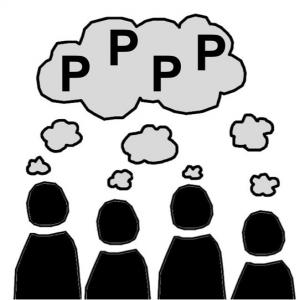
Marketing strategies are developed around the structure of the basic “4 P’s Framework” - product, price, place and promotion. An understanding of the 4 P’s allows the development of the appropriate product, at the right price, easily available through strategic sales placement, and known about through promotion, which also aims to enhance desire. Sometimes, also a 5th P (Policy) is used.
Product
The social marketing "product" is not necessarily a physical offering. A continuum of products exists, ranging from tangible, physical products (e.g. household latrines), to services (e.g. sludge removal service), practices (e.g. using proper toilets, saving water or recycling wastewater) and finally, more intangible ideas (e.g. environmental protection).
When the ‘product’ is behaviour, there may be associated physical products necessary to allow this behaviour change, e.g. new sanitation facilities which need to be considered here.
Before being able to design a product, the targeted "consumers" must have the awareness that they have a problem and that this can be addressed by a product (e.g. the product "household latrine" can address the problem "diarrhoea". In particular in sanitation programmes, it is not easy to achieve this kind of awareness. A lot of demand creation needs to be done in cases, where cause and effect of products are not easily recognisable.
Price
Behaviour change itself may have no price tag. However, associated products (toilets, soap for hand washing, etc.) that make it easier can come at a price. These products need to be available at an affordable price to the target audience.
While the price is often an important contributor to the viability of a behaviour change programme, it is rarely the most important factor ruling product uptake as many assume, even when the very poor people are targeted. However, subsidies or incentives may be necessary in some cases to boost social marketing interventions.
Place
The products required for behaviour change need to be available and accessible in places for the target audience in order to make behaviour change truly possible. For example, the urban and rural poor need clean sanitation facilities nearby in order to change their open defecation practices. Or, people can only wash their hands with soap if they can buy soap in nearby stores, and if water is available. Especially with new technologies (e.g. urine-diversion dehydration toilets) this "P" tends to be very challenging as a whole new supply chain needs to be built.
Promotion
Having a product available in the right place, for the right price is the precondition to start with the promotion of your product. However when your "product" is a new behaviour or a social norm, promotion tends to be quite difficult. Awareness needs to be raised, and a desire to adopt the new behaviour created. This is done via promotion based upon an understanding of the motivations of the target audience and knowledge of their primary and trusted channels of communication (see also awareness raising (see PPT)).
The 5th P: Policy
In the case of social marketing programmes, a 5th "P" may be applied: policy. Policy can be used to make the unhealthy behaviour harder, for example through the banning of open defecation practices in public places, or by making the desired behaviour easier, by subsidising the provision of hand-washing facilities in schools for example. An enabling policy or institutional environment can also be vital for sustaining behaviour change in the longer term.
Social Marketing – Not Just Promotion!
Many behaviour change programmes target only the fourth P - promotion. However, if the products necessary to allow behaviour change are not available in the right places at the right price then behaviour change will be incredibly difficult to achieve (SCOTT 2005). So social marketing is always at least the combination of the four "P's" Product, Price, Place and Promotion.
The 6 Phases of a Social Marketing Process
(Adapted from NATIONAL EXCELLENCE COLLABORATIVE n.y.)
Implementing a sustainable social marketing strategy involves the following six phases:
Phase 1: Describe the Problem
At the beginning of this process, you must clearly describe the problem which will be addressed and a compelling rationale for the program. These are to be based on a thorough review of the available data, the current literature on behavioural theory, and best practices of programmes addressing similar problems. This can, for example, be done through an analysis of Strengths / Weaknesses / Opportunities / Threats (SWOT), which will help you to identify the factors that can affect the program development. Finally, you will develop a strategy team to help develop and promote the program.
Phase 2: Conduct the Market Research
Social marketing depends on a deep understanding of the consumer. In this phase, you will research what exactly your target audience is, and what makes different consumer groups, or “segments,” alike and different from one another.
This research is important, because you will need to approach different consumer groups in a different way to be successful. If you do social marketing for sanitation for example, you will not be very successful if you only have one standard product (e.g. arborloo), at one given price, available only at one place that is promoted only in one way (e.g. through radio campaigns). You will need to segment your consumers into different groups you want to target, because al those groups will have different needs and priorities in regard to sanitation. With market research, you aim to get inside the consumers' head, understanding what they want in exchange for what your program wants them to do, and what they struggle with in order to engage in that behaviour. The objective of the research is to determine:
- How to cluster your target audience into useful segments
- Which target audience segments are most ready to change their behaviour
- What they want or need most in order to do that
Phase 3: Create the Market Strategy
The centrepiece of your social marketing program is to articulate what you want to achieve and how you will do it.
Based on the research findings, begin by selecting a target audience segment and the desired behaviour to be promoted. Afterwards, specify the benefits the target audience will receive for changing or adopting this behaviour. The target audience should really care about these benefits. You may also specify key barriers that the program will help the target audience overcome in order to perform the desired behaviour.
Phase 4: Adapt your Marketing Mix
To be successful, will need to adapt a different marketing mix for all the identified segments from your market research:
- you will have different products for different consumer groups
- which will come at different prices
- that will be available at different places
- and you will reach them with a combination different communication tools (promotion)
Depending on the scope of your programme and your available resources, your will also need to work on the policy level and train your staff to be able to conduct your social marketing campaign.
These processes and considerations involve keeping on strategy and ensuring that each intervention addresses the respective target benefit or barrier, and is accessible and appropriate for the target audience. You will have to develop a plan, timeline, and budget for each of the proposed interventions, and highlight where key partners and stakeholders are needed and how to engage them. At the end of this phase, you should have a comprehensive work plan that describes and ties together all the pieces.
Phase 5: Plan Monitoring and Evaluation
Social marketing is based on an iterative design model, so monitoring data are used to both ensure the program is being implemented as planned and to examine whether your strategy and tactics are suitable or need tweaking. You will also consider if environmental factors (such as policies, economic conditions, new programmes, structural change or improvement) have changed in ways that affect your program. You will have to design a research plan to evaluate the effects or outcomes of the social marketing program. This should involve examining whether:
- desired effects were achieved
- observed effects can be attributed to your program
- the underlying logic of the intervention and its relationship to desired effects are sound
Phase 6: Implement the Intervention and Evaluation
Finally, after all the planning, you are ready to implement the program and the evaluation.
This phase walks through steps for launching the program; producing materials; procuring needed services; sequencing, managing, and coordinating the respective interventions; staying on strategy; fielding the evaluation; capturing and disseminating findings and lessons learned; and modifying activities as warranted.
Your monitoring plan should be alerting you to any issues that require urgent attention or modification. Staying on top of important stakeholder and partner perspectives and concerns is an important function during this phase.
Example of a Social Marketing Strategy
(Adapted from SCOTT 2005; UNITED NATIONS 2008)
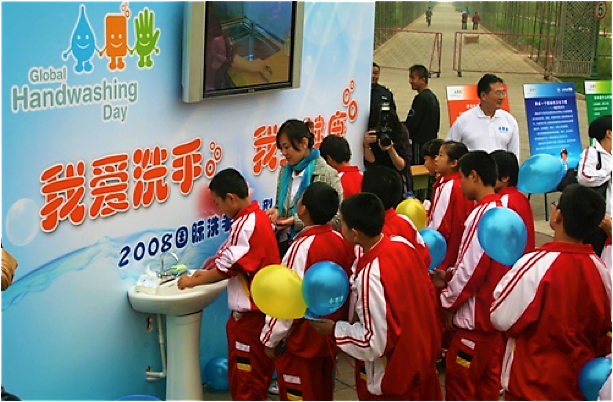
While the evidence for the effectiveness of traditional health promotion approaches is limited, social marketing may provide a fruitful alternative in the promotion of household environmental health. Indeed, the marketing approach to the promotion of hand-washing with soap is taking off internationally as indicated by the development of national and state-wide hand-wash marketing programmes (via public private partnerships) in Ghana, Peru, Senegal, South Africa, Indonesia, Madagascar, Nepal, and Ethiopia among others (see e.g. http://www.globalhandwashing.org). The partnership is guided by the following principles:
- These deaths are preventable: Research shows that, if widely practised, hand-washing with soap could reduce diarrhoea by almost 50 % and respiratory infections by nearly 25% percent.
- Hand-washing with soap is a right: Every child has a right to vaccination and should also have the right to protection from hand-transmitted diseases.
- Large-scale changes in hand-washing practices can be achieved: A large-scale increase in the practice of hand-washing with soap would make a significant contribution to meeting the Millennium Development Goal 5: reducing deaths among children under five by two-thirds by 2015.
As an underlying framework or way of handling issues, social marketing is very useful if you are dealing with a large number of "end customers" in the water and sanitation field. By looking at the end-user as a "customer" and not as a beneficiary, you can adapt proven conventional marketing techniques to achieve a social or environmental benefit. The focus on all four "Ps" will help you not to forget fundamental basics besides promotion (you need a product with a price available somewhere!); also when dealing with non-physical products such as behavioural change (stop open defecation, apply handwashing).
Improving the current situation in your area regarding sanitation and water mostly requires a fundamental change in behaviour of the local community. By applying social marketing principles, you can efficiently change the current behaviour and therefore improve the well-being of the local community.
A Synopsis of Social Marketing
This paper gives a good overview of social marketing and explains its development and contains different definitions.
MACFADYEN, L. STEAD, M. HASTINGS, G. (1999): A Synopsis of Social Marketing. Stirling: Institute for Social Marketing URL [Accessed: 03.09.2010]The Manager’s Guide to Social Marketing. Using Marketing to Improve Health Outcomes from the Social Marketing
This handbook describes the different phases of implementing social marketing and explains how to handle finances and budgets related to social marketing.
NATIONAL EXCELLENCE COLLABORATIVE (n.y): The Manager’s Guide to Social Marketing. Using Marketing to Improve Health Outcomes from the Social Marketing. Washington: Turning Point URL [Accessed: 22.04.2019]Social Marketing: A Consumer-based Approach to Promoting Safe Hygiene Behaviours
This is a good website which gives a comprehensive understanding about social marketing.
SCOTT, B. (2005): Social Marketing: A Consumer-based Approach to Promoting Safe Hygiene Behaviours. (= WELL factsheet ). Leicestershire: WELL URL [Accessed: 22.04.2019]China Marks Global Handwashing Day
Participation and Social Assessment: Tools and Techniques

This resource kit aims to share information and experiences on participatory methods in the context of development cooperation. The primary focus concentrates on providing practical guidance and case examples.
RIETBERGEN-McCRACKEN, J. NARAYAN, D. WORLD BANK (1998): Participation and Social Assessment: Tools and Techniques. Washington: World Bank URL [Accessed: 10.05.2010]A Synopsis of Social Marketing
This paper gives a good overview of social marketing and explains its development and contains different definitions.
MACFADYEN, L. STEAD, M. HASTINGS, G. (1999): A Synopsis of Social Marketing. Stirling: Institute for Social Marketing URL [Accessed: 03.09.2010]The Manager’s Guide to Social Marketing. Using Marketing to Improve Health Outcomes from the Social Marketing
This handbook describes the different phases of implementing social marketing and explains how to handle finances and budgets related to social marketing.
NATIONAL EXCELLENCE COLLABORATIVE (n.y): The Manager’s Guide to Social Marketing. Using Marketing to Improve Health Outcomes from the Social Marketing. Washington: Turning Point URL [Accessed: 22.04.2019]Social Marketing: A Consumer-based Approach to Promoting Safe Hygiene Behaviours
This is a good website which gives a comprehensive understanding about social marketing.
SCOTT, B. (2005): Social Marketing: A Consumer-based Approach to Promoting Safe Hygiene Behaviours. (= WELL factsheet ). Leicestershire: WELL URL [Accessed: 22.04.2019]Behaviour Change
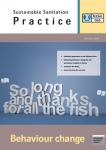
This issue deals with a major but often neglected issue: changing behaviour in sanitation on a significant scale. The papers of this issue are: 1. Ekane et al. deal with the contradiction between national policies and policies and traditional norms at household level. 2. Drechsel and Karg present a social marketing approach to behaviour change. 3. Lechner’s paper describes a social marketing approach to behaviour change, which is at the core of EcoSan Club’s own and recently started project in Uganda. 4. Jurga describes the behaviour change campaigns of WASH United.
EcoSan Club (2013): Behaviour Change. (= Sustainable Sanitation Practice , 16 ). Vienna: EcoSan Club URL [Accessed: 26.08.2013]Sanitation Marketing
This paper deals with the methodology to create demand for sanitation by applying a social marketing approach. A project implemented by EcoSan Club in Northern Uganda serves as illustration.
LECHNER, M. (2013): Sanitation Marketing. Social Marketing – a Tool for Sanitation Behaviour Change?. In: Sustainable Sanitation Practice: Volume 16 , 21-23. URL [Accessed: 05.09.2013]Social Marketing and Public Health. Lessons from the field. A Guide to Social Marketing
Motivating Behaviour Change for Safe Wastewater Irrigation in Urban and Peri-Urban Ghana
Based on experiences from Ghana, this paper outlines the necessary steps and considerations for increasing the adoption probability of food safety interventions (such as safer irrigation practices or careful vegetable washing) under a generic framework, which is based on social marketing, incentive systems, awareness creation/education and supporting regulations.
DRECHSEL, P. ; KARG, H. (2013): Motivating Behaviour Change for Safe Wastewater Irrigation in Urban and Peri-Urban Ghana. In: Sustainable Sanitation Practice : Volume 16 , 10-20. URL [Accessed: 05.09.2013]Show Diarrhoea the Red Card
This paper introduces WASH United and its learning and behaviour change theory to create awareness and behaviour change for increasing the relevance of sanitation and hygiene practices. It describes how WASH United is using games and sport at the Great WASH Yatra in India and via WASH in Schools as well as the impact of these programmes.
JURGA, I. (2013): Show Diarrhoea the Red Card. WASH United: Using Fun, Games and Sport to Create Awareness and Behaviour Change. In: Sustainable Sanitation Practice: Volume 16 , 24-29. URL [Accessed: 05.09.2013]Guidance Manual on Water Supply and Sanitation Programmes
This manual has been prepared as a tool to help improve DFID's (Department for International Developments, United Kingdom) support for water supply and sanitation projects and programmes in developing countries. Its particular focus is on how DFID assistance can best meet the needs of the urban and rural poor for water supply and sanitation services.
DFID (1998): Guidance Manual on Water Supply and Sanitation Programmes. London: Water, Engineering and Development Centre (WEDC) for the Department for International Development (DFID) URL [Accessed: 09.05.2018]