Urine Fertilisation (Small-scale)

Compiled by:
Robert Gensch (Xavier University), Dorothee Spuhler (seecon international gmbh)
Adapted from:
TILLEY, E.; LUETHI, C.; MOREL, A.; ZURBRUEGG, C.; SCHERTENLEIB, R. (2008)
JOENSSON, H.; RICHERT, A.; VINNERAAS, B.; SALOMON, E. (2004)

Executive Summary

Separately collected and hygienised urine is a concentrated source of nutrients that can be applied as a liquid fertilizer in agriculture to replace or complement commercial chemical fertilizer. Small-scale urine use refers to the application of urine on small fields, beds, vertical or container gardens, school gardens, plant pots on terraces, rooftops etc. that can be done on a household or smaller community level without sophisticated transport and application infrastructure.

In Out

Urine, Yellowwater, Fertiliser

Food Products

Urine is a liquid product of the human body that is secreted by the kidneys. A big share of the soluble substances in urine consists of essential plant nutrients like Nitrogen (N), Phosphorus (P) and Potassium (K) that can be easily reused in agriculture. There is almost a mass balance between nutrient consumption and excretion, but the actual nutrient content in urine is of course dependent on the diet and varies between countries as well as between individuals.

The amount of urine produced per person and day depends on the amount of liquid a person drinks, but usually lies within a range of 0.8 to 1.5 L per day for an adult person and about half as much for children, respectively (WHO 2006). On average, an adult person produces around 500 L (550 kg) of urine per year, thus approximately 4 kg of N, 0.5 kg of P and 1 kg of K per person per year (JOENSSON 2004). Urine can therefore be considered as a nitrogen rich liquid fertiliser. Due to its comparably high N and low organic matter content it is often recommended to complement urine application with other nutrient and organic matter sources.

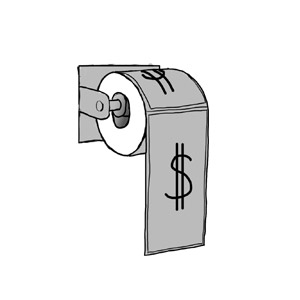
In respect of the 0.5 kg of phosphorus, and taking into account fertiliser prizes from the Nepalese market in 2008 (35 NRs/kg NPK fertiliser (ratio 20:20:10) (GANTENBEIN 2009), this is thus equivalent to 1.2$ per capita per year and 9$ if we consider a family equivalent to 7 adult members. This may not seem a lot, but of course, more money can be saved or income generated from the plants produced.

 MORGAN, P. Aquamor MORGAN, P. Aquamor

Plant growth of cabbage and spinach after 2 months treatment with diluted urine (upper part of the pictures) compared to water application only (lower part of the pictures), Zimbabwe Source: MORGAN, P. (Aquamor)

 DAGERSKOG, L. CREPA

Farmer in Burkina Faso with onions that are fertilised with urine (left) and without urine (right) Source: DAGERSKOG, L. (CREPA)

Urine from healthy people can be considered pathogen free. For additional safety, a storage time of one month in completely sealed container is generally accepted to guarantee that it will be safe for agricultural application at the household level. If urine is used for crops that are eaten by those other than the urine producer, it should be stored for at least 6 months (WHO 2006). You can find more information in the factsheet regarding storage of urine. During storage, high pH (above 9), temperature and ammonia are the main factors for inactivating pathogens (SCHOENNING 2004). The rise of pH to above 9 occurs naturally, when urea is degraded to ammonium. At this pH, the initial concentrations of phosphate, magnesium, calcium and ammonia are no longer soluble, but precipitate forming a bottom layer, which can be handled as fertiliser together with the rest of the urine. Special attention should however be paid on the ventilation of the urine collection and storage chamber: Because of the high pH, coupled with the high ammonium concentration of urine, there is a risk of losing N in the form of ammonia to the air. As long as the collection and storage chambers are sealed and the contact of the urine with air is reduced to a minimum, neither losses of nutrients nor changes in their availability can occur (JOENSSON 2004).

Because of its high nitrogen content, urine should be applied at a rate corresponding to the desired plant nitrogen requirements. A starting point for dimensioning urine application are local recommendations for use of mineral nitrogen fertilisers.

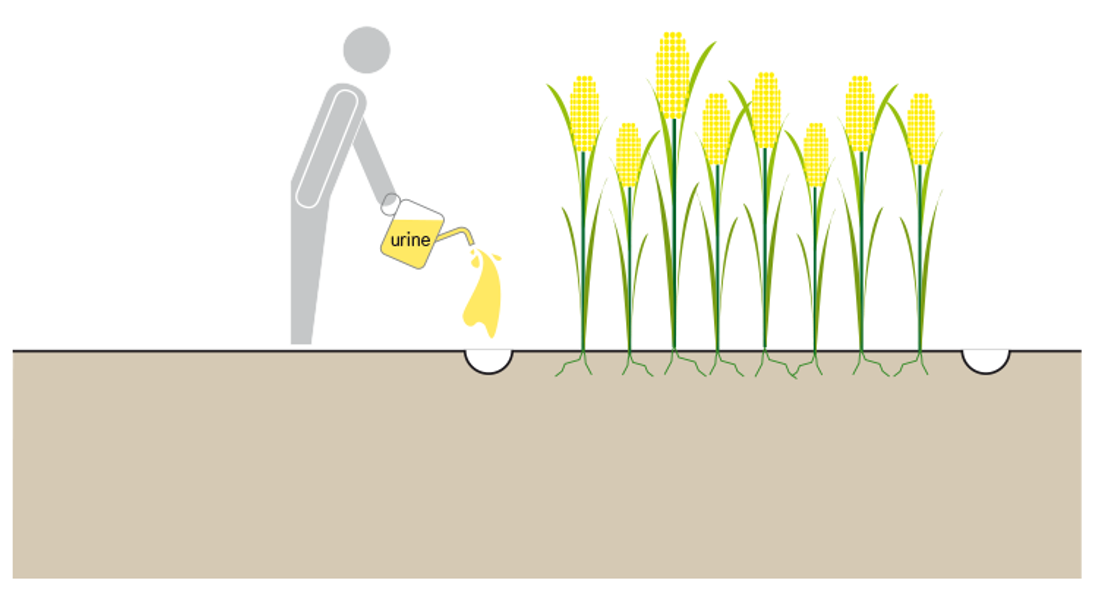
Urine can be applied neat or diluted with water. The existing recommendations vary widely, depending on the local conditions. A common and often recommended dilution rate is 1:3 (1 part urine with 3 parts of water). It should be considered that dilution increases the volume to be spread and thus labour, transport expense, equipment needed, health risk etc. Yet, the advantages of dilution include a noticeable odour reduction and a decreased risk of over-application.

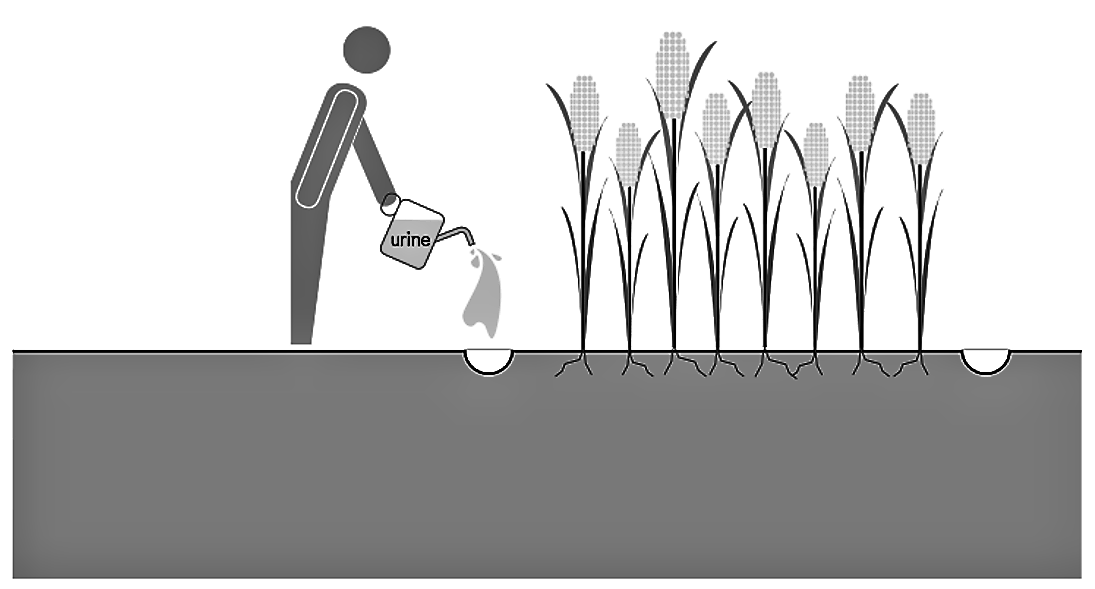
The urine is introduced into the soils via small ditches besides the young tomato crops. Then the ditches are covered to prevent ammonia loss to the air. CREPA headquarter, Ouagadougou, Burkina Faso.

The urine is introduced into the soils via small ditches besides the young tomato crops. Then the ditches are covered to prevent ammonia loss to the air. CREPA headquarter, Ouagadougou, Burkina Faso. Source: SuSanA on Flickr (2010)

For best fertilising effect and to avoid ammonia losses to the air, urine should be incorporated into the soil as soon as possible after application, preferably instantly. Equipment that can be used for the application comprises watering cans, dippers, but also empty water bottles cut into half etc. A shallow incorporation is enough, and different methods are possible. One is to apply urine in small furrows that are covered after application. Washing the nutrients into the soil with subsequent application of water is another option. When spreading urine, it should not be applied on leaves or other parts of the plants, as this can cause foliar burning.

 Gensch, R. XU

Small-scale application of diluted urine with watering can in the Philippines. Source: GENSCH, R. (XU)

A good availability of nutrients is particularly important in early stages of cultivation. Once the crop enters its reproductive stage it hardly takes up any more nutrients. Fertilizations should stop after between 2/3 and 3/4 of the time between sowing and harvest. A waiting period of one month between fertilizations and harvest should always be observed for health reasons.

Health risks associated with the use of human urine in plant production are generally low. However during the source separation faecal cross-contamination can occur. Respective measures to reduce potential health risks to an acceptable minimum following the WHO multi-barrier strategy should always be considered.


Applicability

Urine is especially beneficial where crops are lacking nitrogen or require a lot of nitrogen to grow. Examples of some crops that grow well with urine include: maize, rice, millet, sorghum, wheat, chard, turnip, carrots, kale, cabbage, lettuce, leek, onions, bananas, paw-paw, and oranges. Urine application is ideal for rural and peri-urban areas where agricultural lands are close to the point of urine collection. Households, schools etc. can use their own urine on their own plot of land. Regardless, the most important aspect is that there is a need for nutrients otherwise the urine can become a source of pollution and nuisance if dealt with improperly.

Advantages

  • Low risk of pathogen transmission
  • Low cost and reduced dependence on costly synthetic fertilizers
  • Income generation
  • Contributes to self-sufficiency and food security
  • Easy to understand techniques

Disadvantages

  • Urine is a relatively heavy medium (low value/weight) and difficult to transport
  • Smell may be offensive
  • The application of urine is labour intensive
  • Makes only sense if there is space, capacity and motivation for agricultural activity

References Library

JOENSSON, H.; RICHERT, A.; VINNERAAS, B.; SALOMON, E. (2004): Guidelines on the Use of Urine and Faeces in Crop Production . Stockholm: EcoSanRes. URL [Accessed: 17.04.2012]. PDF

GANTENBEIN, B. ; KHADKA, R. (Editor) (2009): Struvite Recovery from Urine at Community Scale in Nepal Final Project Report Phase I.. Duebendorf and Kathmandu: EAWAG - SANDEC. PDF

TILLEY, E.; LUETHI, C.; MOREL, A.; ZURBRUEGG, C.; SCHERTENLEIB, R. (2008): Compendium of Sanitation Systems and Technologies. Duebendorf and Geneva: Swiss Federal Institute of Aquatic Science and Technology (EAWAG). URL [Accessed: 15.02.2010]. PDF

WHO (Editor) (2006): Guidelines for the safe use of wastewater excreta and greywater. Volume III. Wastewater and Excreta Use in Aquaculture. Geneva: World Health Organisation. URL [Accessed: 26.02.2010]. PDF

SCHOENNING, C.; STENSTROEM, T.A. (2004): Guidelines on the Safe Use of Urine and Faeces in Ecological Sanitation Systems. Stockholm: Stockholm Environment Institute (SEI). PDF

Further Readings Library

Reference icon

RICHERT, A.; GENSCH, R.; JOENSSON, H.; STENSTROEM, T.A.; DAGERSKOG, L. (2010): Practical Guidance on the Use of Urine in Crop Production. Stockholm: Stockholm Environment Institute (SEI). URL [Accessed: 20.07.2010]. PDF

This practical guideline on the use of urine in agricultural productions gives some background information on basic plant requirements and how they can be met with urine as a liquid fertiliser.


Reference icon

GENSCH, R. ; MISO, A.; ITSCHON, G. (2011): Urine as Liquid Fertilizer in Agricultural Production in the Philippines. Cagayan de Oro: Sustainable Sanitation Center Xavier University (XU), the Philippine Sustainable Sanitation Knowledge Node, the Philippine Ecosan Network, and the Sustainable Sanitation Alliance (SuSanA). URL [Accessed: 04.05.2011]. PDF

This field guide has been developed to accommodate the ever-increasing demand for more detailed and scientifically backed information on how to use urine in agricultural production. It is intended primarily for practitioners and experts in the water, sanitation, planning, and agriculture sectors, as well as local and national government officials from the various sectors, NGO and individuals interested and working in the field of agriculture and sustainable sanitation in the Philippines and the wider Southeast Asian region.


Reference icon

DAGERSKOG, L. ; SuSanA (Editor) (2009): Urine and Faeces as Fertilizers in the CREPA Network. pdf presentation. Ouagadougou: Sustainable Sanitation Alliance. PDF

Presentation on experiences with the use of urine (and faeces) in agriculture including research results, conducted taste tests and calculations on the fertiliser value.


Reference icon

HOLMER, R.; SANTOS, C.; SOL, G.; LEE, S.; ELORDE, E.; AQUINO, A.; GUANZON, Y.; ACHAS, D.; CASERIA, J.; FACTURA, H.; MISO, A.; OCLARIT, R.; MONTES, A.; Periurban Vegetable Project (PUVeP) (Editor) (2008): Philippine Allotment Garden Manual. (pdf presentation). Cagayan de Oro City: Xavier University College of Agriculture. PDF

This manual provides information on the allotment garden project in Cagayan de Oro including an introduction to Ecosan and the use of treated urine in the gardens.


Reference icon

JOENSSON, H.; RICHERT, A.; VINNERAAS, B.; SALOMON, E. (2004): Guidelines on the Use of Urine and Faeces in Crop Production . Stockholm: EcoSanRes. URL [Accessed: 17.04.2012]. PDF

These guidelines provide a thorough background on the use of urine (and faeces) for agricultural purposes. Aspects discussed are requirements for plant growth, nutrients in excreta, hygiene aspects, and recommendations for cultivation. It provides detailed guidance on the use of urine for purposes.


Reference icon

GENSCH, R. ; MISO, A.; ITSCHON, G. (2011): Urine as Liquid Fertilizer in Agricultural Production in the Philippines. Cagayan de Oro: Sustainable Sanitation Center Xavier University (XU), the Philippine Sustainable Sanitation Knowledge Node, the Philippine Ecosan Network, and the Sustainable Sanitation Alliance (SuSanA). URL [Accessed: 04.05.2011]. PDF

This field guide has been developed to accommodate the ever-increasing demand for more detailed and scientifically backed information on how to use urine in agricultural production. It is intended primarily for practitioners and experts in the water, sanitation, planning, and agriculture sectors, as well as local and national government officials from the various sectors, NGO and individuals interested and working in the field of agriculture and sustainable sanitation in the Philippines and the wider Southeast Asian region.


Reference icon

VALLEY VIEW UNIVERSITY (Editor) (2008): Fertilisation with Urine in Agriculture – in a Nutshell. University of Hohenheim Germany: Berger Biotechnik and Valley View University Ghana.. PDF

This leaflet provides a summary on why and how to fertilize with urine including brief application recommendations, hygiene considerations and trouble shooting support.


Reference icon

MORGAN, P. (2009): Experiments at Recycling Urine in School Gardens . Addis Ababa 2009. PDF

This presentation gives a lively overview on experiences with urine recycling in school gardens in Zimbabwe.


Reference icon

MORGAN, P. (2009): Garden Trials Using Urine as a Plant Food. Addis Ababa 2009. PDF

This presentation describes some practical methods on how to do garden trials with urine used as a fertilizer.


Reference icon

ECOSANRES (Editor) (2008): Guidelines on the Use of Urine and Faeces in Crop Production. Factsheet. (pdf presentation). Stockholm: Stockholm Environment Institute. PDF

A 2-page factsheet summarizing the EcoSanRes ‘Guidelines on the Use of Urine and Faeces in Crop Production’ publication with short information on urine as a fertilizer, application rates etc.


Reference icon

WHO (Editor) (2006): Guidelines for the safe use of wastewater excreta and greywater. Volume III. Wastewater and Excreta Use in Aquaculture. Geneva: World Health Organisation. URL [Accessed: 26.02.2010]. PDF

Volume III of the Guidelines for the Safe Use of Wastewater, Excreta and Greywater deals with wastewater and excreta use in aquaculture and describes the present state of knowledge regarding the impact of wastewater-fed aquaculture on the health of producers, product consumers and local communities. It assesses the associated health risks and provides an integrated preventive management framework.


Case Studies Library

Reference icon

HOLMER, R.; SuSanA (Editor) (2009): UDD Toilets with Reuse in Allotment Gardens.. (pdf presentation). Cagayan de Oro Philippines: Sustainable Sanitation Alliance. URL [Accessed: 11.08.2010]. PDF

Case study on an urban agriculture project with urine reuse in Northern Mindanao, Philippines.


Reference icon

KUMAR, P. ; SuSanA (Editor) (2008): Community-Led Water and Ecosan Programme. Shaanxi Province, China: Sustainable Sanitation Alliance (SuSanA). PDF

Case study on a community led sanitation project that introduced UDDT, Biogas & Double Urn Toilets and use of urine in Shaanxi Province, China.


Reference icon

MUELLEGGER, E. ; SuSanA (Editor) (2009): UDD Toilets at a Rural Secondary School Kalunga, Uganda. Sustainable Sanitation Alliance. URL [Accessed: 12.12.2012]. PDF

Case study on a school UDDT project and the reuse of the collected urine in Kalunga, Uganda


Reference icon

SAYRE, E.; VON MUENCH, E.; SuSanA (Editor) (2009): Rural Community and School UDD Toilets in Misamis Oriental. (pdf presentation). Libertad, Initao & Manticao, Philippines: Sustainable Sanitation Exchange. PDF

Case study on a community and school UDDT project with urine reuse in Misamis Oriental, Philippines.


Awareness Raising Material Library

Reference icon

WECF (Editor) (2010): How to Separate Urine. Utrecht/Munich/Annemasse: Women in Europe for a Common Future. URL [Accessed: 06.01.2011]. PDF

This flyer contains information about the importance of urine reuse. The nutrients in urine are easily taken up by plants. The fertilised plant will grow faster, develop more leaves and produce higher yields. Applying urine to crops instead of chemical fertilisers saves money and energy and produces a similar yield. One person produces about 500 liter urine per year.


Training Material Library

Reference icon

XAVIER UNIVERSITY (Editor) (2009): Excreta Use in Agriculture, Lecture taken from the XU Ecosan Course. XAVIER UNIVERSITY . PDF

Short lecture on the reuse of urine and faeces in agriculture with a local Philippine focus.


Reference icon

JENSSEN, P.; HEEB, J.; GANAKAN, K.; CONRADIN, K. (2008): M4-7: Agricultural Aspects. In: HEEB, J.; JENSSEN, P.; GNANAKAN; CONRADIN, K. (2008): Ecosan Curriculum 2.3. Switzerland, India and Norway. URL [Accessed: 21.03.2011]. PDF

Lecture on agricultural aspects of ecosan comprising chapters on plant requirements, composition and plant availability of nutrients in human excreta as well as general application recommendations and safety measures.


Important Weblinks

http://www.ecosanres.org/BigSweetTomatoes.htm [Accessed: 21.01.2010]

This link provides information on the Stockholm World Water Week Session ‘Big Sweet Tomatoes – Food Security and Productive Sanitation’ that focussed on a project funded by the International Fund for Agricultural Development (IFAD) in Niger with a strong focus on urine reuse.

http://www.reseaucrepa.org/ [Accessed: 21.01.2010]

Website of the Centre for Low-Cost Water Supply and Sanitation (CREPA) with plenty of material (films, posters, brochures) on the use of urine in agriculture.