
Executive Summary
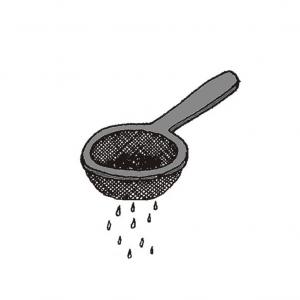
Straining is a very simple method of filtration. In this process, water is poured through a piece of cloth, which removes some of the suspended silt and solids and destroys some pathogens. After straining, water may not be perfectly safe for drinking but it can be a drinking water improvement step for people with no other treatment options. It is very important to use a clean cloth, as a dirty cloth may introduce additional pollutants into the water.
| In | Out |
|---|---|
Drinking Water |
Basic Information
Straining water through a piece of clean cloth is an extremely simple, low- resource method and widely used for household water treatment. Cloth filters have been used in many cultures for centuries. Typically in South Asia, a sari or saree (a strip of unstitched cloth ranging from four to nine meters in length that is draped over the body of women (it is also a traditional garment) is folded 7 to 8 times and used as a filter. In laboratory experiments using electron microscopy, it was found that an inexpensive sari cloth, folded four to eight times provides a filter of about 20 µm mesh size, was small enough to remove all zooplankton, most phytoplankton, all Vibrio Choleraeattached to the plankton and other particulates larger than 20 µm (COLWELL ET AL 2003, SWIC N.Y.).
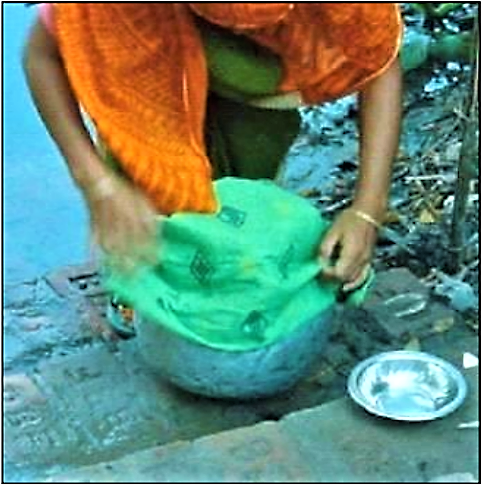
The risk of cholera is therefore reduced of about 50% (HUQ et al., 1996).Water is poured through the folded sari cloth and collected in a pot underneath. The efficiency of straining depends on the weave of the cloth and the number of times it has been folded. Specific monofilament filter cloths are very efficient where guinea worm disease is prevalent. Such cloths remove organisms known as copepods, which act as intermediate hosts for the guinea-worm larvae. Dracunculiasis, more commonly known as guinea worm disease, is caused by drinking water hosting a parasite called Dracunculus medinensis (DPD 2008).
| Very Effective For: | Somewhat Effective For: | Not Effective For: |
| Helminths
| Taste, smell, colour | Viruses Chemicals |
Effectiveness of straining. Adapted from CAWST (2009)
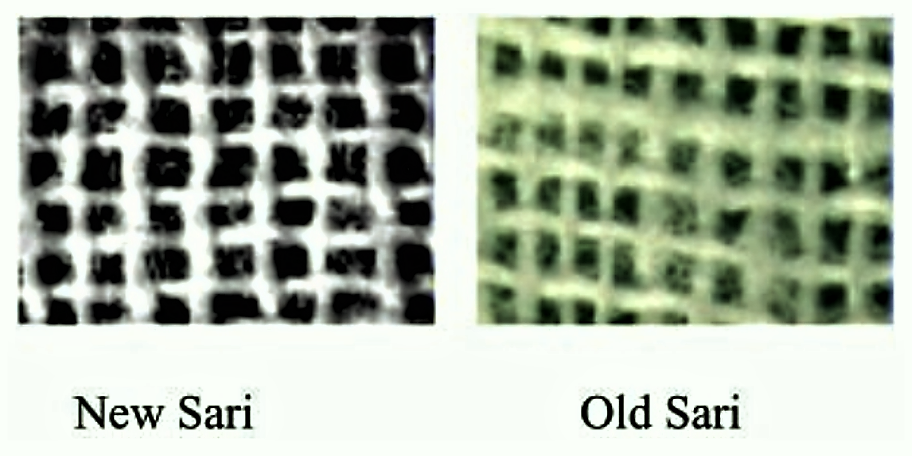
In a laboratory experiments, it was found that an old sari cloth made up of cotton is most effective in removing V. Cholerae. After several launderings, threads of an old sari become soft and loose, reducing the pore size compared to a new sari cloth (see pictures above) (COLWELL et al. 2003). Cloth filters do not remove chemical contaminants or dissolved compounds from water. After straining, additional treatment methods can further improve the safety of drinking water.
Though the water collected from cloth filter is not perfectly safe, it is a drinking water improvement step for people with limited options. This procedure can be used as the first stage of treatment. Then water can be treated through available methods like sand filtering(see also biosand filter) or treated furtherwith disinfection methods such as SODIS, boiling, chlorination and others. Both cotton and nylon cloths are suitable for filtration. It is very important to use clean and dry cloth, as a dirty cloth may introduce additional pollutants or pathogens into the water.
A woman uses a sari cloth to strain water
Dracunculiasis — Guinea Worm Disease
A Simple Filtration Method to Remove Plankton-Associated Vibrio Cholerae in Raw Water Supplies in Developing Countries
Research conducted on removal of plankton and associated particulates by filter constructed from nylon net and sari materials. The result obtained indicates that 99% of Vibrio Cholerae, i.e., those cells attached to plankton was removed from the water sample during simple filtration, forepidemics strains from various geographical sources including Bangladesh, Brazil, India, and Mexico.
HUQ, A. ; XU, B. ; CHOWDHURY, M.A.R. ; ISLAM, M.S. ; MONTILLA, R. ; COLWELL, R.R. (1996): A Simple Filtration Method to Remove Plankton-Associated Vibrio Cholerae in Raw Water Supplies in Developing Countries. In: Applied and Environmental Microbiology: Volume 62 , 2508-2512. URL [Accessed: 05.08.2010]Reduction of cholera in Bangladeshi villages by simple filtration
This research was carried out in Matlab, Bangladesh in collaboration with the International Centre for Diarrhoeal Disease Research, Bangladesh. They found significant filtering of zooplankton (i.e. copepods) and colonial phytoplankton from household water by nylon and sari filtration, as well as reduction of cholera cases in the studied villages.
COLWELL, R.R. ; HUQ, A. ; ISLAM, M.S. ; AZIZ, K.M.A. ; YUNUS, M. ; KHAN, N.H. ; MAHMUD, A. ; SACK, R.B. ; NAIR, G.B. ; CHAKRABORTY, J. ; SACK, D.A. ; RUSSEK-COHEN, E. (2003): Reduction of cholera in Bangladeshi villages by simple filtration. In: Proceedings of the National Academy of Sciences of the United States of America (PNAS): Volume 100 , 1051-1055. URL [Accessed: 24.05.2019]Sari Filtration
Simple Sari Cloth Filtration of Water is Sustainable and Continues to Protect Villagers from Cholera in Matlab, Bangladesh
Follow-up study conducted after five years in Matlab, Bangladesh to determine the impact of simple sari cloth filtration on the incidence of cholera. Analysis of the data showed that 31% of the women used filters, of which 60% are sari filters for household water, reducing the incidence of cholera by 48%.
HUQ, A. ; YUNUS, M. ; SOHEL, S.S. ; BHUIYA, A. ; EMCH, M. ; LUBY, S.P. ; RUSSEK-COHEN, E. ; NAIR, G.B. ; SACK, R.B. ; COLWELL, R.R. (2010): Simple Sari Cloth Filtration of Water is Sustainable and Continues to Protect Villagers from Cholera in Matlab, Bangladesh. In: mBio: Volume 1 URL [Accessed: 05.08.2010]Straining. Fact Sheets - Academic
A three-page factsheet containing introduction, operation procedure, treatment efficiency, operating criteria and other information related to straining.
CAWST (2009): Straining. Fact Sheets - Academic. (= Household Water Treatment and Safe Storage Fact Sheets - Academic ). Calgary: Centre for Affordable Water and Sanitation Technology (CAWST) URL [Accessed: 24.05.2019]Straining. Fact Sheets - Simplified
One-page factsheet containing information on effectiveness, appropriateness, acceptability and costs of straining.
CAWST (2009): Straining. Fact Sheets - Simplified. (= Household Water Treatment and Safe Storage Fact Sheets - Simplified ). Calgary: Centre for Affordable Water and Sanitation Technology (CAWST) URL [Accessed: 24.05.2019]Straining. Fact Sheets - Academic
A three-page factsheet containing introduction, operation procedure, treatment efficiency, operating criteria and other information related to straining.
CAWST (2009): Straining. Fact Sheets - Academic. (= Household Water Treatment and Safe Storage Fact Sheets - Academic ). Calgary: Centre for Affordable Water and Sanitation Technology (CAWST) URL [Accessed: 24.05.2019]Guinea Worm Cloth Filter
Factsheet with technology description and relevant information ona manufactured commercial guinea worm cloth filter and its implementation in Ghana.
GWEP (2008): Guinea Worm Cloth Filter. (= Household Water Treatment and Safe Storage (HWTS) Product and Implementation Fact Sheet ). Tamale: Guinea Worm Eradication Program (GWEP)Smart Water Solutions
This booklet on water gives examples of innovations such as the use of sunlight to purify water, effective low-cost water filters, low-cost drip irrigation and locally produced hand pumps that are five times cheaper than imported pumps.
NWP (2006): Smart Water Solutions. Examples of innovative, low-cost technologies for wells, pumps, storage, irrigation and water treatment. (= Smart water solutions ). Amsterdam: Netherlands Water Partnership (NWP) URL [Accessed: 06.09.2011]Smart Disinfection Solutions
This booklet, part of the Smart Water Solutions series provides a wide range of methods and products for home water treatment in rural areas.
NWP (2010): Smart Disinfection Solutions. Examples of small-scale disinfection products for safe drinking water. (= Smart water solutions ). Amsterdam: KIT Publishers URL [Accessed: 17.05.2019]Emergency Treatment of Drinking-Water at the Point of Use. Technical Notes on Drinking-Water, Sanitation and Hygiene in Emergencies
Normally, drinking water supplies need to be treated during and after an emergency to make them safe and acceptable to the user. This technical note describes some of the most common and simple treatment options suitable for use during an emergency.
KAYAGA, S. REED, B. (2013): Emergency Treatment of Drinking-Water at the Point of Use. Technical Notes on Drinking-Water, Sanitation and Hygiene in Emergencies. (= Technical Notes on Drinking-Water, Sanitation and Hygiene in Emergencies , 5 ). Geneva: World Health Organization (WHO) URL [Accessed: 26.08.2013]Simple Sari Cloth Filtration of Water is Sustainable and Continues to Protect Villagers from Cholera in Matlab, Bangladesh
Follow-up study conducted after five years in Matlab, Bangladesh to determine the impact of simple sari cloth filtration on the incidence of cholera. Analysis of the data showed that 31% of the women used filters, of which 60% are sari filters for household water, reducing the incidence of cholera by 48%.
HUQ, A. ; YUNUS, M. ; SOHEL, S.S. ; BHUIYA, A. ; EMCH, M. ; LUBY, S.P. ; RUSSEK-COHEN, E. ; NAIR, G.B. ; SACK, R.B. ; COLWELL, R.R. (2010): Simple Sari Cloth Filtration of Water is Sustainable and Continues to Protect Villagers from Cholera in Matlab, Bangladesh. In: mBio: Volume 1 URL [Accessed: 05.08.2010]Conservation et Traitement de l Eau a Domicile
This practical guide provides a review of different processing techniques and adequate water conservation at home and is structured around 10 key questions that should be posed before choosing a suitable solution.
DESILLE, D. (2013): Conservation et Traitement de l Eau a Domicile. Paris: Programme Solidarite Eau (PSeau) URL [Accessed: 06.06.2013]Reduction of cholera in Bangladeshi villages by simple filtration
This research was carried out in Matlab, Bangladesh in collaboration with the International Centre for Diarrhoeal Disease Research, Bangladesh. They found significant filtering of zooplankton (i.e. copepods) and colonial phytoplankton from household water by nylon and sari filtration, as well as reduction of cholera cases in the studied villages.
COLWELL, R.R. ; HUQ, A. ; ISLAM, M.S. ; AZIZ, K.M.A. ; YUNUS, M. ; KHAN, N.H. ; MAHMUD, A. ; SACK, R.B. ; NAIR, G.B. ; CHAKRABORTY, J. ; SACK, D.A. ; RUSSEK-COHEN, E. (2003): Reduction of cholera in Bangladeshi villages by simple filtration. In: Proceedings of the National Academy of Sciences of the United States of America (PNAS): Volume 100 , 1051-1055. URL [Accessed: 24.05.2019]A Simple Filtration Method to Remove Plankton-Associated Vibrio Cholerae in Raw Water Supplies in Developing Countries
Research conducted on removal of plankton and associated particulates by filter constructed from nylon net and sari materials. The result obtained indicates that 99% of Vibrio Cholerae, i.e., those cells attached to plankton was removed from the water sample during simple filtration, forepidemics strains from various geographical sources including Bangladesh, Brazil, India, and Mexico.
HUQ, A. ; XU, B. ; CHOWDHURY, M.A.R. ; ISLAM, M.S. ; MONTILLA, R. ; COLWELL, R.R. (1996): A Simple Filtration Method to Remove Plankton-Associated Vibrio Cholerae in Raw Water Supplies in Developing Countries. In: Applied and Environmental Microbiology: Volume 62 , 2508-2512. URL [Accessed: 05.08.2010]Simple Sari Cloth Filtration of Water is Sustainable and Continues to Protect Villagers from Cholera in Matlab, Bangladesh
Follow-up study conducted after five years in Matlab, Bangladesh to determine the impact of simple sari cloth filtration on the incidence of cholera. Analysis of the data showed that 31% of the women used filters, of which 60% are sari filters for household water, reducing the incidence of cholera by 48%.
HUQ, A. ; YUNUS, M. ; SOHEL, S.S. ; BHUIYA, A. ; EMCH, M. ; LUBY, S.P. ; RUSSEK-COHEN, E. ; NAIR, G.B. ; SACK, R.B. ; COLWELL, R.R. (2010): Simple Sari Cloth Filtration of Water is Sustainable and Continues to Protect Villagers from Cholera in Matlab, Bangladesh. In: mBio: Volume 1 URL [Accessed: 05.08.2010]Household Water Treatment Manual
This manual on household water treatment system includes various useful topics on safe water and multi barrier approach (source protection, sedimentation, filtration, disinfection and safe storage).
CAWST (2008): Household Water Treatment Manual. Calgary: Centre for Affordable Water and Sanitation Technology (CAWST)Cloth filter could cut cholera deaths
Link to the website of British Broadcasting Cooperation, which has covered an interesting news on cloth filter and its relation to cholera death with views of an expert.